
Tax Up, Landlords Out: Where Should Your Next £ Go?
The Budget lifts tax on rental profit to 24%, 44% and 49% from April 2027. A host, an interviewer and a landlord talk through the cause, the effect and where your next pound should go.

I asked my accountant for a 24% return on my property. He said, "Congratulations, the Treasury has just asked for 24% of the one you already have."
I laughed. Then I checked the date on the Budget paper and stopped laughing for about eleven seconds. Then I laughed again, because if you cannot laugh at your tax bill you will have nothing left to laugh at, and I have a lot of tax bills to get through.
Welcome to today's show. I am your host, Kyle. Across the table is our interviewer, Jo, who asks the questions you were thinking. Our guest is Dev, a landlord with four rentals in the Midlands, a spreadsheet he is slightly too proud of, and a kettle that has seen things.
Today's topic: tax is up, landlords are wobbling, so where should the next pound go?
Kyle: At the Budget on 28 October 2026, the government confirmed higher income tax rates on property income. From the 2027 to 2028 tax year, the property basic rate will be 24%, the property higher rate 44% and the property additional rate 49%. That applies across England, Wales and Northern Ireland, and it is set out in the Treasury's own overview of tax legislation and rates. Before the Budget, the planned rates were 22%, 42% and 47%, so the Budget added two more percentage points on top.
Jo: And that is only if you own the property in your own name?
Kyle: Correct. The rise is on income tax paid by individuals on rental profit. A company that owns a property pays corporation tax and is not affected by this particular change. That does not make a company the right answer for everyone, because moving a property into one has its own costs and rules, so please talk to an accountant before you do anything with the keys.
Dev: Can I jump in? I read that as rental profit now being taxed four points above what I pay on my wages. That is the bit that stung.
Kyle: That is a fair way to put it, Dev. Four percentage points above the rates on earnings, from 6 April 2027.
The cause: why is this happening?
Jo: Why would a government do this? Be fair to them.
Kyle: The government's stated reason is fairness between income from work and income from assets. Its published material says it is raising rates on property, savings and dividend income to narrow the gap between the tax paid on work and the tax paid on income from assets. You can agree or disagree, and plenty of landlords disagree loudly, but that is the reason on the record.
Jo: And the other pressures? It is not just tax, is it?
Kyle: No. Landlords in England have had a busy couple of years. Section 21 "no fault" evictions ended on 1 May 2026 and tenancies now roll on month to month, so the way you end a tenancy has changed. The landlord register opens on 15 December 2026, starting in the West Midlands, and it costs £65 per property per year, with councils able to issue civil penalties of up to £7,000 for a single breach. Rented homes need an EPC rating of C by 1 October 2030, with spending capped at £10,000 per property. And on 5 November the Bank of England raised Bank Rate to 4%, which matters to anyone with a mortgage that is not fixed.
Dev: Honestly, any one of those I can handle. It is all of them in the same eighteen months that makes the kettle go on.
Kyle: That is exactly the cause. It is not one change, it is a stack of them, and each one is reasonable in isolation.
The effect: what is it doing to landlords, tenants and rents?
Jo: Let us talk about the scary headline. Are landlords really leaving?
Kyle: Two things are true at the same time, and I think honesty means holding both. First, the evidence that people are thinking about it is real. A snapshot poll by Propertymark, reported in The Independent, found that 57% of its respondents had received enquiries about leaving the private rented sector in the days after the Budget. That is a small, quick sample of members, so treat it as a mood, not a measurement. Second, the government's response in the same article is that there is no evidence of large numbers of landlords leaving.
Dev: And the numbers back both of you, which is annoying.
Kyle: They do. The same report says the total number of privately rented homes in England has passed five million for the first time, while the sector's share of all homes has slipped from 20.3% in 2016 to 19.5% today. At the same time, property data firm TwentyEA says former rentals now make up about 15% of homes on the sales market, with more than 800,000 sold off since 2020. Many of those are bought by people who will live in them, which shrinks the pool of homes to rent. At the same time, a lot of the new supply comes from large developers, often at the premium end.
Jo: What does that do to rents?
Kyle: Forecasters expect upward pressure. Savills, quoted in the same report, projects average rents rising by about 15% to 2031, and by about 16% in London. That is a forecast, not a promise, and forecasts have a long history of being wrong in both directions. But the logic is simple: fewer homes to rent and the same number of people who need one tends to push the price up.
Jo: Now the human question. What does it do to the person on the other side of the tenancy?
Kyle: This is the part I do not want us to skip, because there is a health story here as well as a wealth story. If you are a tenant who has been in a home for four years with a landlord who treats you well, you are in a good place. If you are a tenant who has to move, you are searching a market with less choice and higher prices, and that is stressful. Stress is not abstract. It shows up in sleep, in relationships and in the number of times you check your bank balance before breakfast.
Dev: And landlords are people too, to be fair. I have lain awake over a boiler. I am not proud of it.
Kyle: Of course. Landlord stress is real, and it is mostly money stress with a dash of "have I missed a deadline?". Which brings us to what to do about it.
The solution: where should the next pound go?
Jo: Dev, you have a bit of money left over this year. What are you tempted to do with it?
Dev: Honestly? Nothing. Sit on it. Wait to see what else they announce.
Kyle: I understand the instinct, and "do nothing" is sometimes the right call. But there is a middle path, and it is the one I would look at first: spend on the things that make a tenant stay, keep the home out of trouble and protect what the property is worth. In a market with less supply, a good home with a tenant who is happy to renew is worth more than an empty one.
Jo: Give me the practical list.
Kyle: Five buckets, in the order I would think about them.
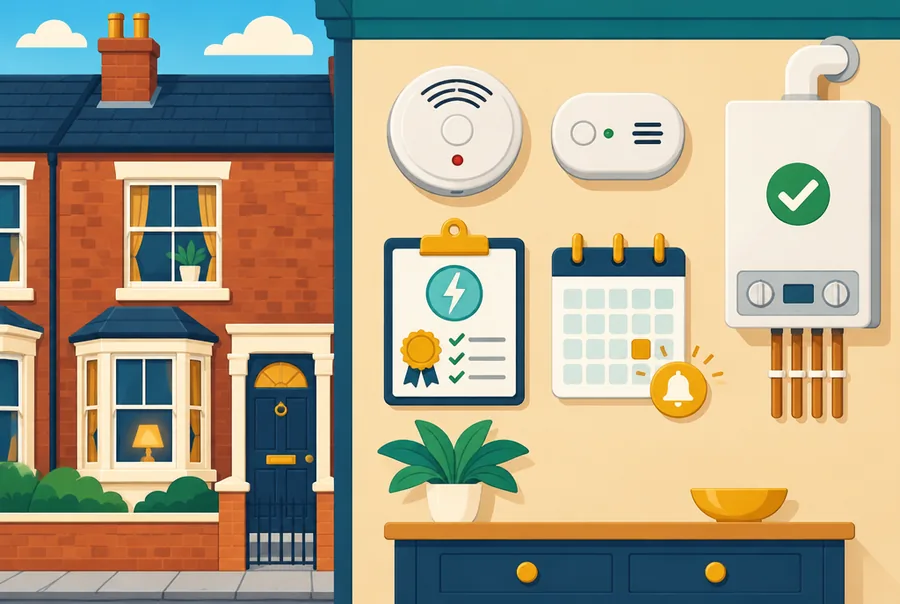
1. Safety and compliance first. Before anything pretty, make sure the boring legal stuff is up to date: the gas safety record, the electrical safety report, smoke and carbon monoxide alarms, and the right paperwork given to the tenant. It is the cheapest "upgrade" there is, because getting it wrong is expensive. Put the dates in a calendar today. Our own guide on the gas safety check explains the annual cycle and the 28-day rule for giving the tenant their copy.
2. Fix the small things before they become the big things. Damp, leaks, a failing extractor fan, a loose handrail. These are the repairs that quietly turn into four-figure jobs. The health side is obvious: damp and mould are bad for the people living with them, and a landlord who responds quickly is a landlord people want to rent from. The wealth side is just as plain. An early, small fix costs a fraction of the late, large one. As an illustration only, a leaking tap washer is a trivial job, while a slow leak behind a wall can mean ripping out plaster and flooring.
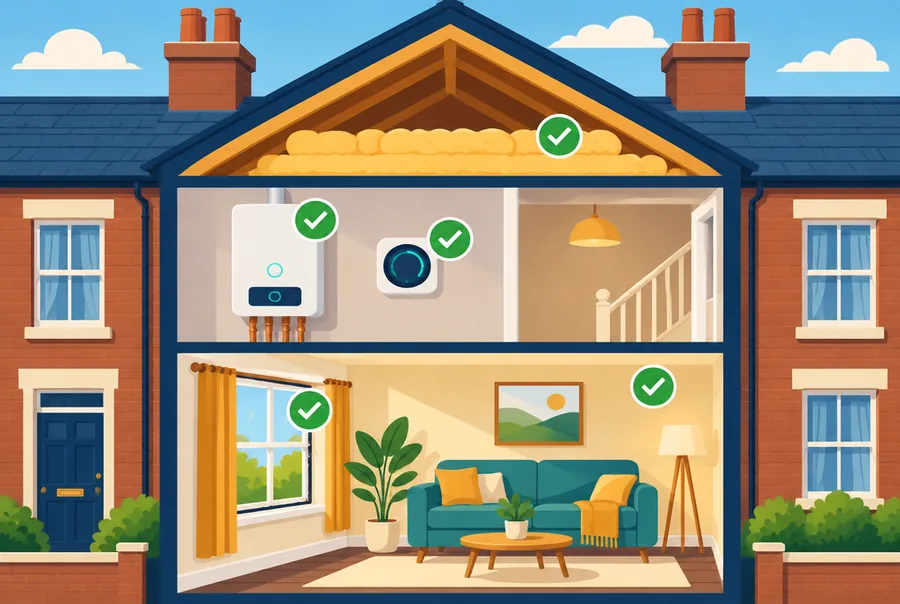
3. Think about energy efficiency now, not in 2030. The EPC C requirement for rented homes in England and Wales is 1 October 2030, with a cost cap of £10,000 per property, and spending from 1 October 2025 counts towards that cap. Insulation, draught-proofing, efficient heating controls and better glazing are the usual routes. Doing it early means you can choose the time, get several quotes and pick a quiet gap between tenants, rather than doing it in a panic in 2030 when every installer is booked. And warmer homes are cheaper for the tenant to heat, which makes them easier to let and easier to keep let. Check your current EPC rating first so you know the size of the gap.
4. Durable beats trendy. In a rental, the best finish is the one that survives. Hard-wearing flooring, wipeable paint in a neutral colour, a kitchen worktop that forgives a hot pan, and bathroom fittings that are easy to replace. You are not decorating for yourself. You are decorating for the tenant after the tenant after this one.
5. Keep records, and keep them tidy. This one costs almost nothing and pays back every year. Photos before and after, receipts, dates and who did the work. It helps with your tax return, with any dispute, and with a buyer or a lender if you ever sell or remortgage.
Jo: Let me ask the tax question, because Dev is already reaching for the calculator. Does it matter whether I call something a repair or an improvement?
Kyle: It matters a great deal. As a general principle, a repair that restores something to its previous condition is normally an expense you can set against your rental income, which reduces your taxable profit. An improvement, where you add something new or make the property better than it was, is normally capital spending. That does not reduce your rental profit, but it can count when you work out any capital gain if you sell. There is also a relief for replacing certain household items, such as furniture and appliances, like for like. The line between a repair and an improvement is not always obvious, so ask your accountant before you commit the money, not after the work is done.
Dev: So a bigger tax rate makes each deductible pound more valuable.
Kyle: That is the logic, yes, but I would be careful not to let the tax tail wag the property dog. Never spend a pound you do not need to spend just because it is deductible. A deductible pound is still a pound you no longer have.
Health and wealth: the part we should not forget
Jo: Kyle, you keep saying health and wealth. Why both?
Kyle: Because I have met plenty of property people who built wealth and lost their health doing it, and I do not recommend the trade. A portfolio that wakes you at 3am is not a good investment, whatever the yield says.
Here is what I would do this week if I owned a few properties:
- Wealth: Look at the real numbers, not the hopeful ones. Take your rental profit, apply the new rates from April 2027, and see what is left after mortgage interest, insurance, repairs and the register fee. If a property only works when everything goes right, that is information.
- Wealth: Check your borrowing. With Bank Rate at 4%, find the date your fixed rate ends and what the refinancing cost might be. Talk to a mortgage adviser early rather than the week before the deal expires.
- Health: Put every deadline in one place so your head does not have to hold them. The register opens on 15 December in the West Midlands, then region by region. Gas, electrical, alarms, EPC, the tenancy paperwork. Write the dates down so you can stop rehearsing them in the shower.
- Health: Talk to your tenants. A short, friendly message once a quarter, and a quick walk round with their agreement, prevents more problems than any spreadsheet. A tenant who feels heard tells you about the drip before it becomes a flood.
- Health: Take a day off from it. Genuinely. Going for a walk is not a failure to manage your portfolio.
Dev: I will take the walk. I will take the kettle, too.
Where this leaves us
Jo: Final question. Is this the end of the small landlord?
Kyle: No, but it is the end of the casual one. If you treat it as a business, know your numbers, keep your paperwork, look after your homes and your tenants, you can still do well, and in a market with less supply, a well-run rental is worth having. If you are not sure it works any more, selling is a legitimate decision, and so is holding steady and doing the sums properly. Whichever you choose, choose it with the facts in front of you rather than the headlines.
Three things to do today
- Add every compliance date for every property to your calendar, with a reminder a month ahead.
- Work out your rental profit under the April 2027 rates, and look at your next mortgage renewal date.
- Pick one small repair you have been putting off and book it.
And if you do nothing else, make a cup of tea and have a laugh at the Treasury's expense. It is the only thing they have not yet put a rate on.





Frequently asked
What are the new property income tax rates?
From the 2027 to 2028 tax year, the property basic rate is 24%, the higher rate 44% and the additional rate 49%, in England, Wales and Northern Ireland, according to the Treasury's Budget 2026 overview of tax legislation and rates.
Does the rise affect companies?
The change applies to income tax on property income for individuals. Companies pay corporation tax and are not affected by this change, but moving a property into a company has its own costs and rules, so take advice first.
When does the landlord register open and what does it cost?
It opens on 15 December 2026, starting in the West Midlands, then region by region. Registration costs £65 per property per year, and councils can issue civil penalties of up to £7,000 for a single breach.
When do rented homes need an EPC rating of C?
By 1 October 2030 in England and Wales, with spending capped at £10,000 per property. Spending from 1 October 2025 counts towards the cap.
Are repairs and improvements treated the same for tax?
Not usually. Repairs that restore something to its previous condition are normally deductible against rental income, while improvements are normally capital spending. Ask your accountant before you commit.
Sources
- Budget 2026: overview of tax legislation and rates — HM Treasury, GOV.UK
- Changes to tax rates for property, savings and dividend income — GOV.UK
- Register your rental property: guidance for landlords — GOV.UK
- Improving the energy performance of privately rented homes: government response — GOV.UK
- Fears of rent rise disaster as majority of landlords plan to leave — The Independent
Read next
More landlord news

Stay ahead of the next deadline.
Certificate reminders, rent and arrears records, and an evidence trail. Every account starts with 27 days of everything, no card.
Start freeGoing for possession in England?
The Possession & Compliance Playbook: 31 pages on Section 8 after the Renters' Rights Act. One-off £29, instant PDF.
See the PlaybookEducation Hub