
Awaab's Law for Private Landlords: What's Law Now
Awaab's Law does not apply to private landlords yet. Here is what the government proposes, what already applies, and how to prepare.
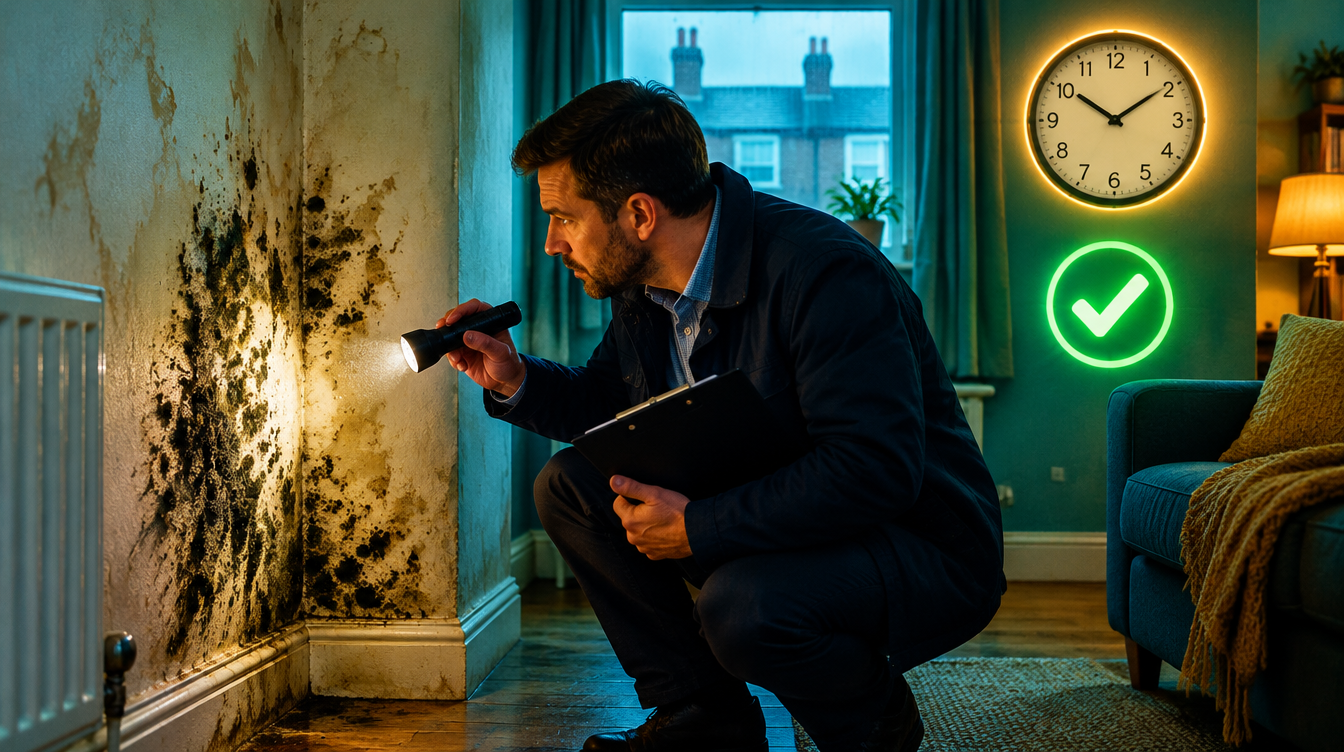
On 9 October 2026 the government opened a consultation on bringing Awaab's Law to private rented homes in England. This is the position on 5 November 2026.
What is Awaab's Law?
Awaab Ishak was two years old when he died in December 2020. He had been exposed to mould in his family's socially rented home.
The law named after him sets clear deadlines for landlords to deal with serious hazards. It does not create brand new repair duties. It makes existing duties happen on time.
Where does it apply today?
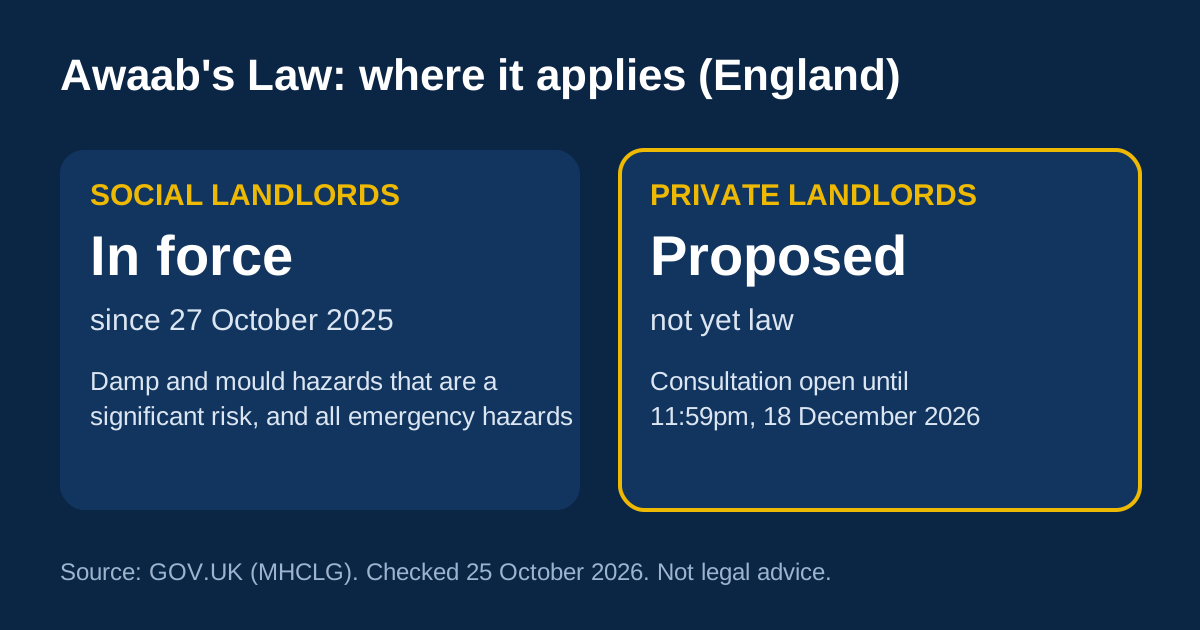
| Landlord type | Status | What it covers |
|---|---|---|
| Social landlords | In force since 27 October 2025 | Damp and mould hazards that are a significant risk, and all emergency hazards |
| Social landlords | Phase 2 due 30 November 2026 | Seven more hazards where they pose a significant risk: electrical hazards, falls, fire and explosions, excess cold, excess heat, structural collapse and falling elements, and domestic hygiene |
| Social landlords | Phase 3, date not yet set | The remaining housing health and safety rating system hazards, apart from overcrowding |
| Private landlords | Consultation open, not law | How to apply it to private tenancies |
The consultation says Awaab's Law will be extended to private tenancies as part of the Renters' Rights Act 2025. The question being asked is how.
What is proposed for private landlords?
Everything in this section is a proposal in the government consultation. It could change before it becomes law.
| Step | Proposed timescale |
|---|---|
| Investigate a significant hazard | Within 10 working days |
| Written summary of the findings | Within 3 working days of the investigation (unless the work is all done by then) |
| Make a significant hazard safe | Within 5 working days, with temporary measures if needed |
| Start preventative works | Take steps within 5 working days and physically start within 12 weeks |
| Emergency hazard | As soon as practicable and within 24 hours |
It would cover the hazards in the housing health and safety rating system, apart from overcrowding.
What about the tenant?
The proposals expect tenants to report hazards, allow access, and decide whether to accept alternative accommodation. Awaab's Law would not apply to a hazard caused wholly or mainly by the tenant breaching their agreement, for example deliberate damage.
How would it be enforced?
The consultation proposes writing the duties into tenancy agreements as implied terms. A tenant could then go to court for breach of contract, or complain to the new Private Rented Sector Landlord Ombudsman, expected in 2028.
Councils keep their existing powers, including penalties of up to £7,000 for the most serious category 1 hazards. They would not enforce the Awaab's Law timescales directly.
When could it start?
The consultation points to 2027 at the earliest. The impact assessment assumes a phased start between 2028 and 2030. Nothing is fixed.
Timeline: Awaab's Law so far
| Date | What happened |
|---|---|
| December 2020 | Two-year-old Awaab Ishak dies after prolonged exposure to mould in his social rented home |
| 27 October 2025 | Awaab's Law starts for social landlords: significant damp and mould hazards, and all emergency hazards |
| 13 July 2026 | Phase 2 regulations laid in Parliament for social landlords |
| 9 October 2026 | Consultation opens on private tenancies and licences |
| 30 November 2026 | Phase 2 due to start for social landlords: seven more hazard types |
| 18 December 2026 | Consultation closes at 11:59pm |
| 2027 at the earliest | Earliest possible start for private landlords, according to the consultation |
| 2028 | Private Rented Sector Landlord Ombudsman expected |
| 2028 to 2030 | Phased start assumed in the government's impact assessment |
| Date not yet set | Phase 3 for social landlords: the remaining hazards, apart from overcrowding |
Anyone can reuse this table as a quick reference. Please link back to this page if you do.
What the Decent Homes Standard changes
The Renters' Rights Act 2025 lets government apply a Decent Homes Standard to private rented homes for the first time, with councils able to enforce it. The government has said the new standard will apply to the private and social rented sectors from 2035. It is separate from Awaab's Law. Awaab's Law is about how fast you deal with a hazard. The Decent Homes Standard is about the condition a home must meet.
If you use a letting agent
The consultation says that if you use an agent to manage repairs, you stay ultimately liable, because Awaab's Law would work as an implied term of the tenancy. It adds that you may need new contractual agreements with your agent to be confident the duties are met. The government says 18% of private landlords use an agent for management and 46% for letting.
Agree in writing how hazard reports reach you, who instructs contractors, and who keeps the dated record.
What already applies to you?
Landlords must already act on hazards that are significant and seriously threaten tenants' health and safety. GOV.UK says around one in ten private rented homes has a category 1 hazard, the most serious level.
So damp and mould is not a "wait and see" issue. The consultation adds speed and process, not a new reason to act.
What to do now
You do not need to wait for the law. These steps make any future rules easier to meet:
- Log every report as a dated event. Note when it arrived, when you replied, when it was inspected and what was done.
- Photograph the problem at the start and again after the work.
- Act fast on anything serious. Do not wait for a deadline that does not exist yet.
- Keep what you told the tenant, in writing.
- Respond to the consultation if you want to shape the timescales.
In Landlord Junction the hazard log keeps that record: report received, acknowledged, investigated, written summary sent. It also shows the working days since the report. For private rentals no deadline is in force yet, so treat any marker as a guide. Dated records matter in other disputes too, which is why our free Section 8 guide also asks for them.
Checklist: your damp and mould record (copy it)
- Date and time the tenant reported it, and how
- Date you acknowledged it
- Date of inspection and who attended
- What you found, with photos
- Date you sent a written summary
- Work done, by whom and when
- Date the tenant confirmed it was fixed
Have your say
Anyone can respond to the consultation, online or by email, until 11:59pm on 18 December 2026. You do not have to answer every question.
England only. This is general information, not legal advice. Checked against GOV.UK on 5 November 2026.

Frequently asked
Does Awaab's Law apply to my private rental now?
No. It applies to social landlords. The government has said it will be extended to private rented tenancies and opened a consultation on how. Until that is decided and made law there are no Awaab's Law deadlines for private landlords.
When does the consultation close?
At 11:59pm on 18 December 2026. Anyone can respond, online or by email.
What timescales are proposed for private landlords?
For significant hazards, the consultation proposes investigating within 10 working days and making safe within 5 working days. For emergency hazards it proposes within 24 hours. These are proposals, not law.
Do I have to act on damp and mould today?
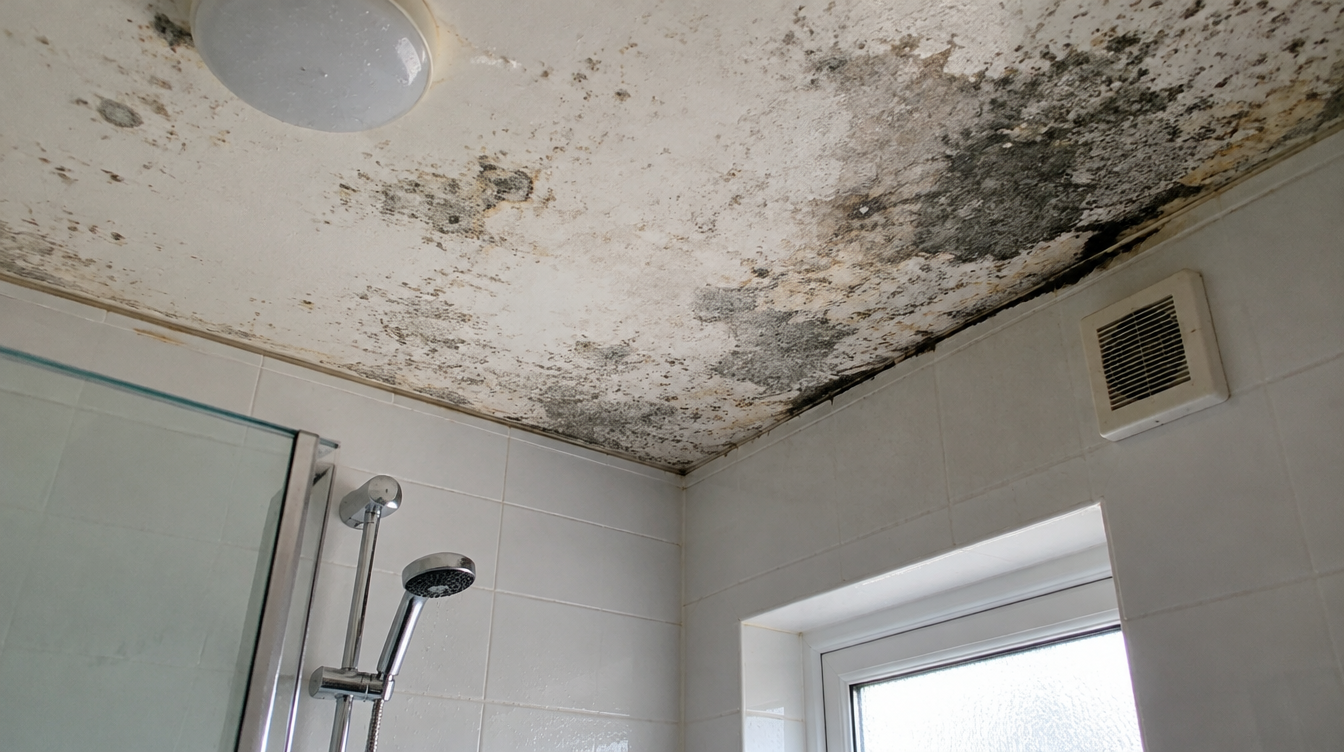
Yes, in the sense that existing housing rules already require landlords to deal with serious hazards, and councils can enforce them. What the consultation adds is clear timescales and processes.
Does Awaab's Law cover repairs my letting agent manages?
The consultation says the landlord would remain ultimately liable even when an agent manages repairs, because the duties would work as an implied term of the tenancy. Landlords may need new contractual agreements with their agent.
When does the Decent Homes Standard apply to private rentals?
The government has said the new Decent Homes Standard will apply to private and social rented homes in England from 2035. It is separate from Awaab's Law.
Has Awaab's Law changed for social landlords?
Yes. Phase 2 is due to start on 30 November 2026 and covers seven more hazard types, including electrical hazards, falls, excess cold and heat, and fire. Private landlords are not covered yet.
Sources
- Extending Awaab's Law to private rented tenancies and to licences (consultation) — MHCLG, GOV.UK
- Awaab's Law: consultation on timescales for repairs in the social rented sector, government response — GOV.UK
- Clampdown on dangerous homes to protect more tenants and families — GOV.UK
- Housing health and safety rating system: guidance for landlords — GOV.UK
- Repairs and housing conditions — Shelter England
- Repairs and housing conditions if you're renting — Citizens Advice
- Legal and regulation hub — NRLA
- Safer homes for 4m tenants with quicker action on dangerous homes (Awaab's Law phase 2) — GOV.UK
- The New Decent Homes Standard: policy statement — GOV.UK
Read next
More landlord news


Stay ahead of the next deadline.
Certificate reminders, rent and arrears records, and an evidence trail. Every account starts with 27 days of everything, no card.
Start freeGoing for possession in England?
The Possession & Compliance Playbook: 31 pages on Section 8 after the Renters' Rights Act. One-off £29, instant PDF.
See the PlaybookEducation Hub